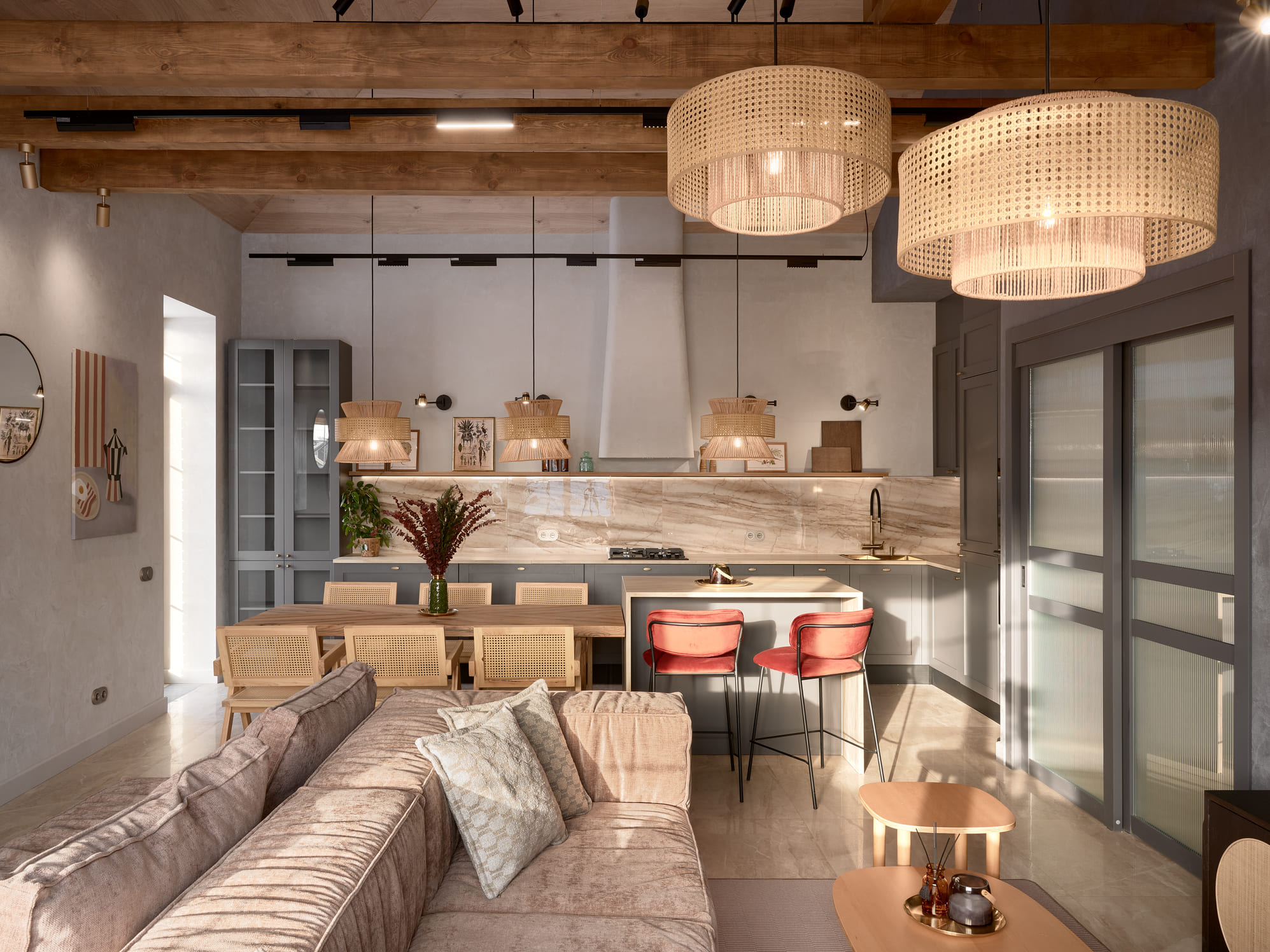
В обновленном интерьере кухня перестает быть исключительно утилитарной зоной и становится естественной частью жизни дома. Поддерживают эту идею два острова, которые меняют восприятие кухни. Один из них выполняет рабочую функцию и помогает организовать процессы приготовления, а второй может свободно перемещаться в пространстве, создавая вокруг себя ощущение движения и свободы. Благодаря этому кухня-гостиная легко адаптируется под разные сценарии — от семейных завтраков до больших встреч с друзьями.
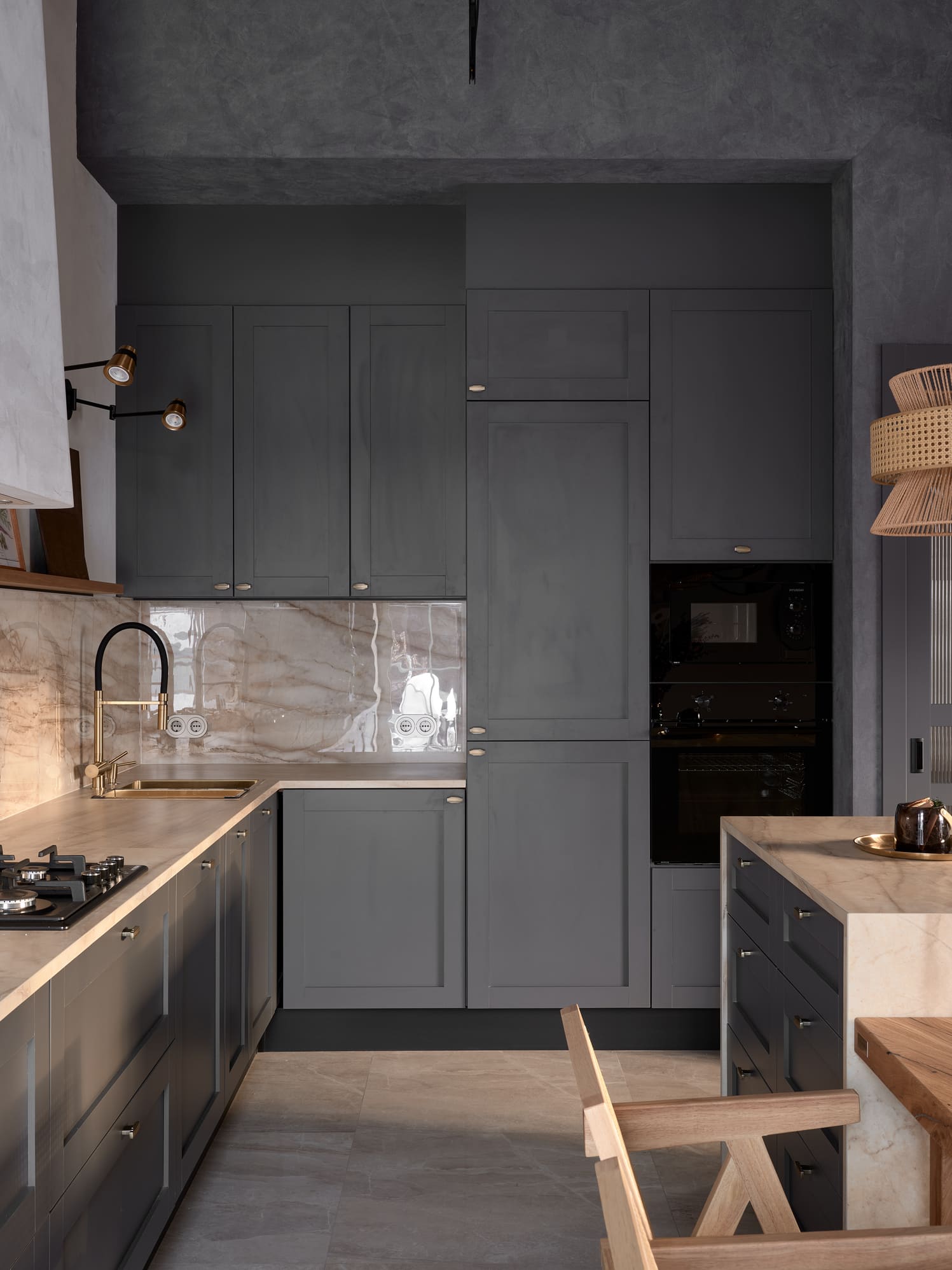
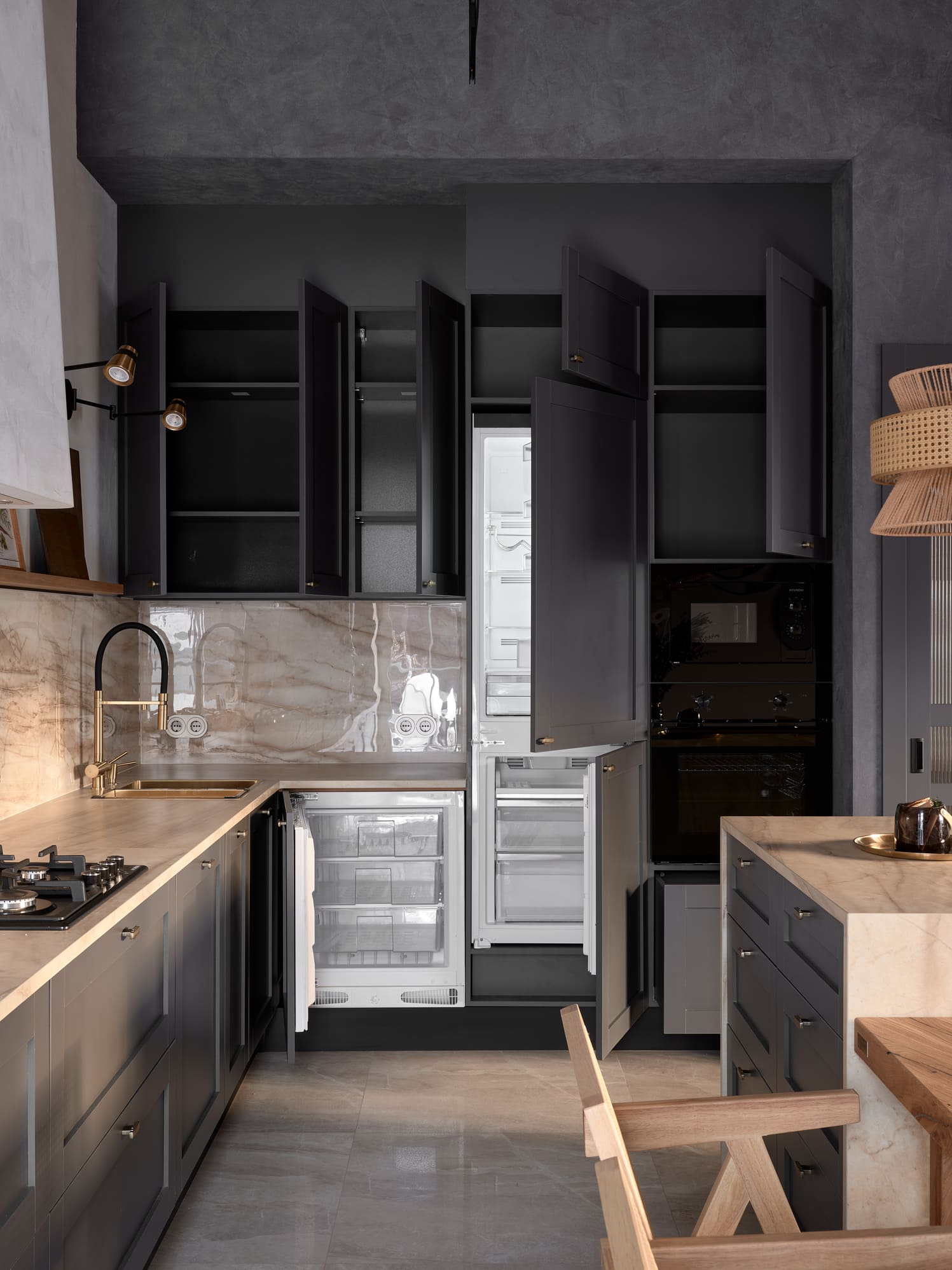
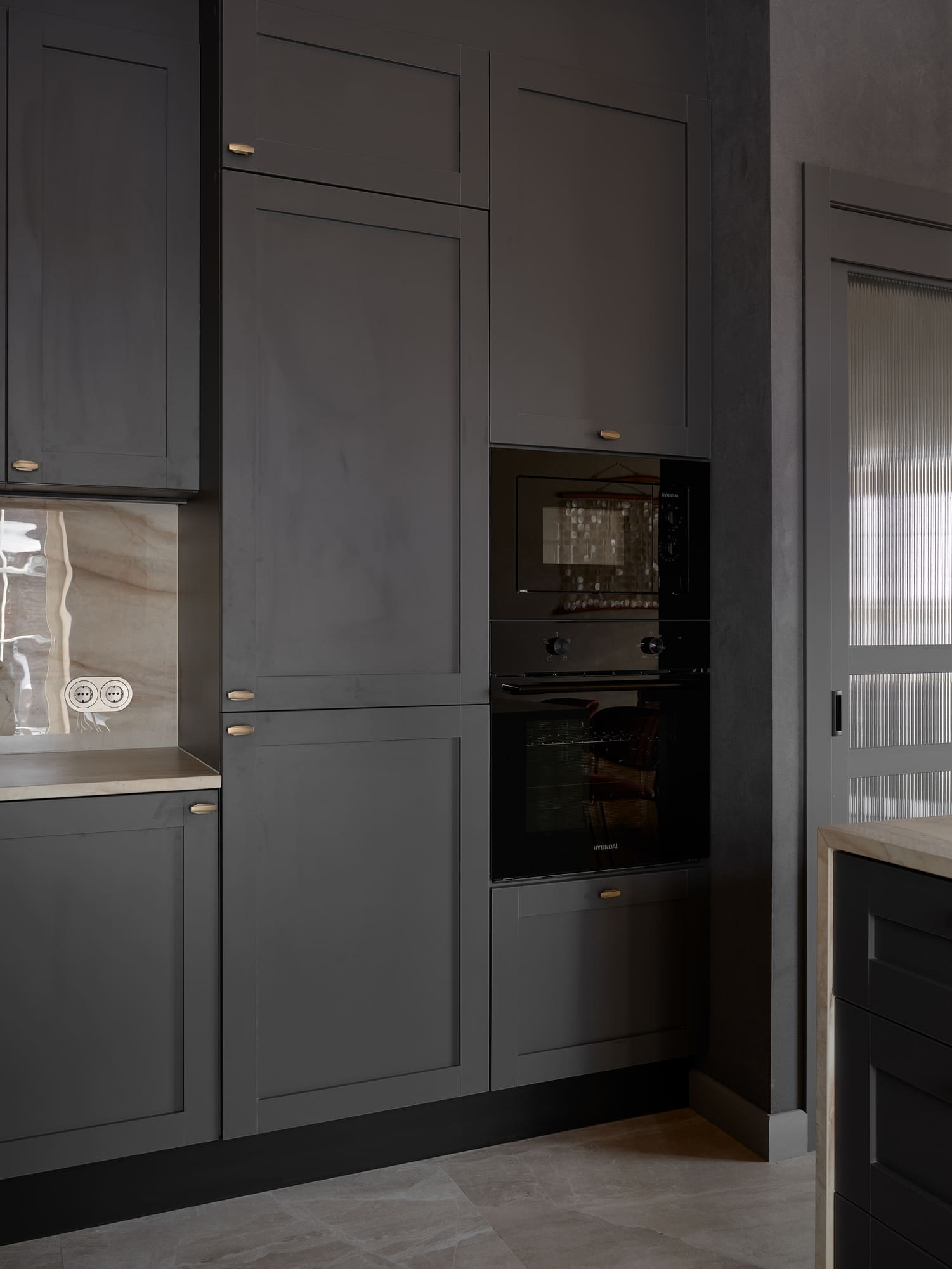
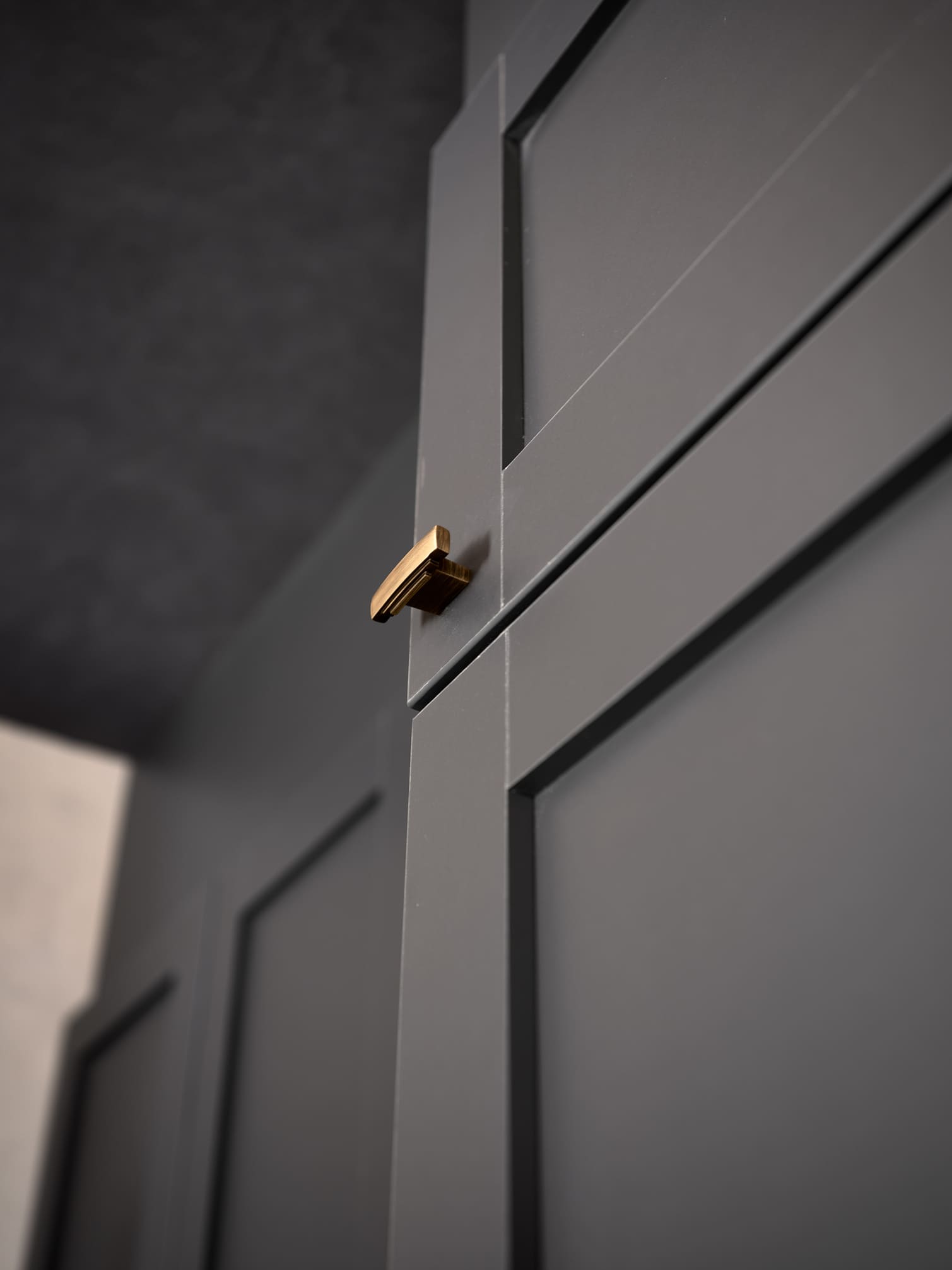
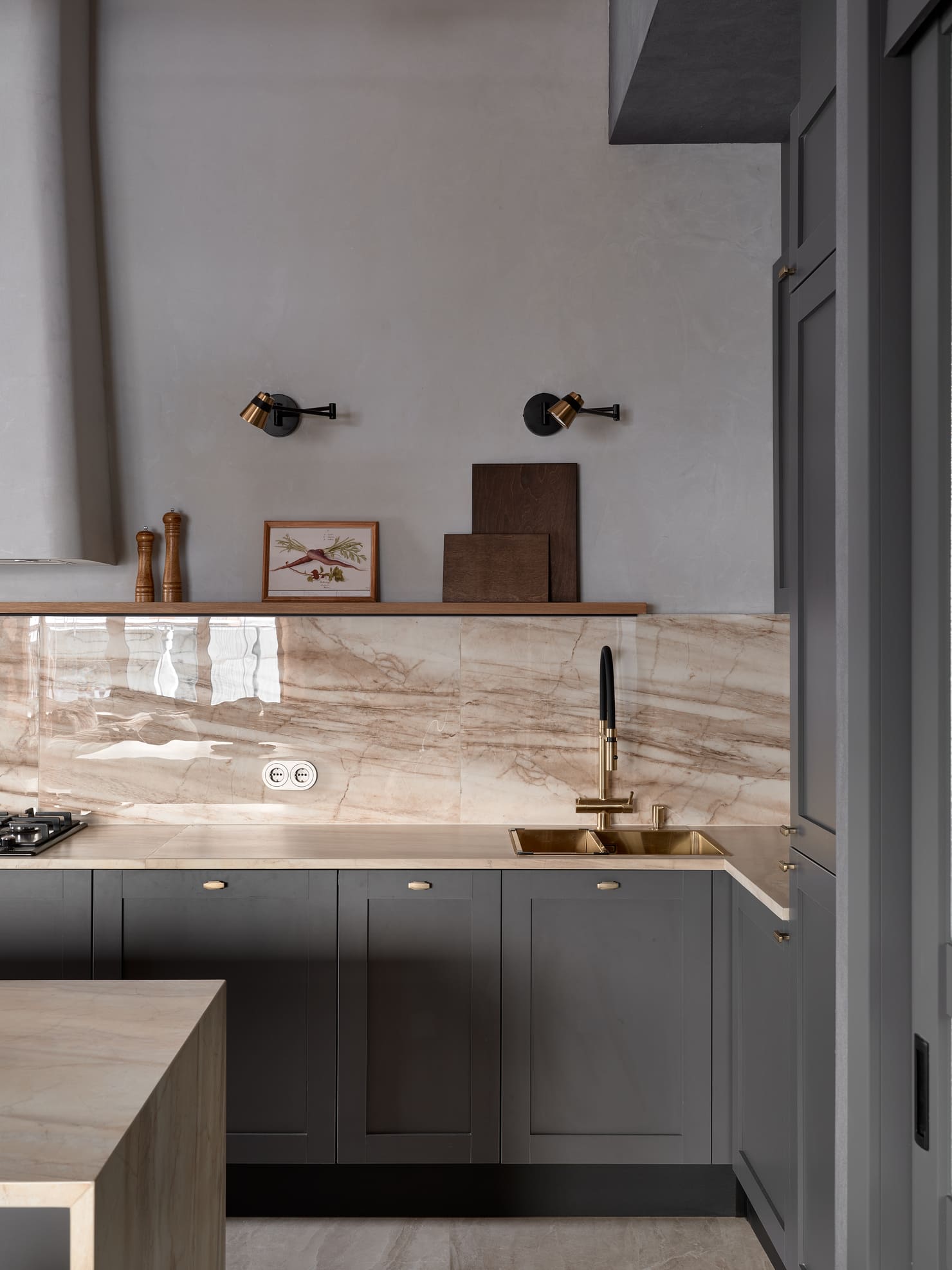
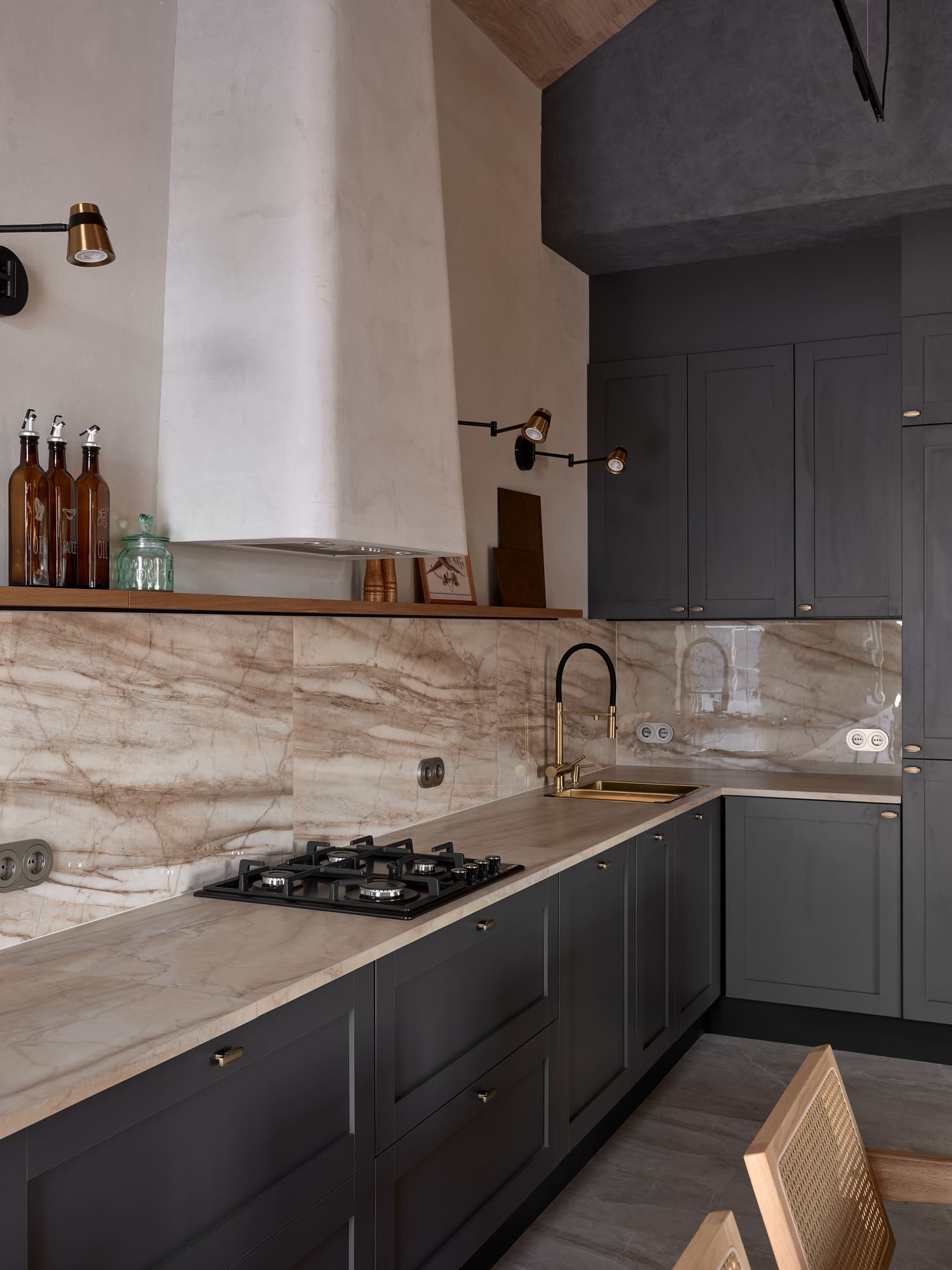
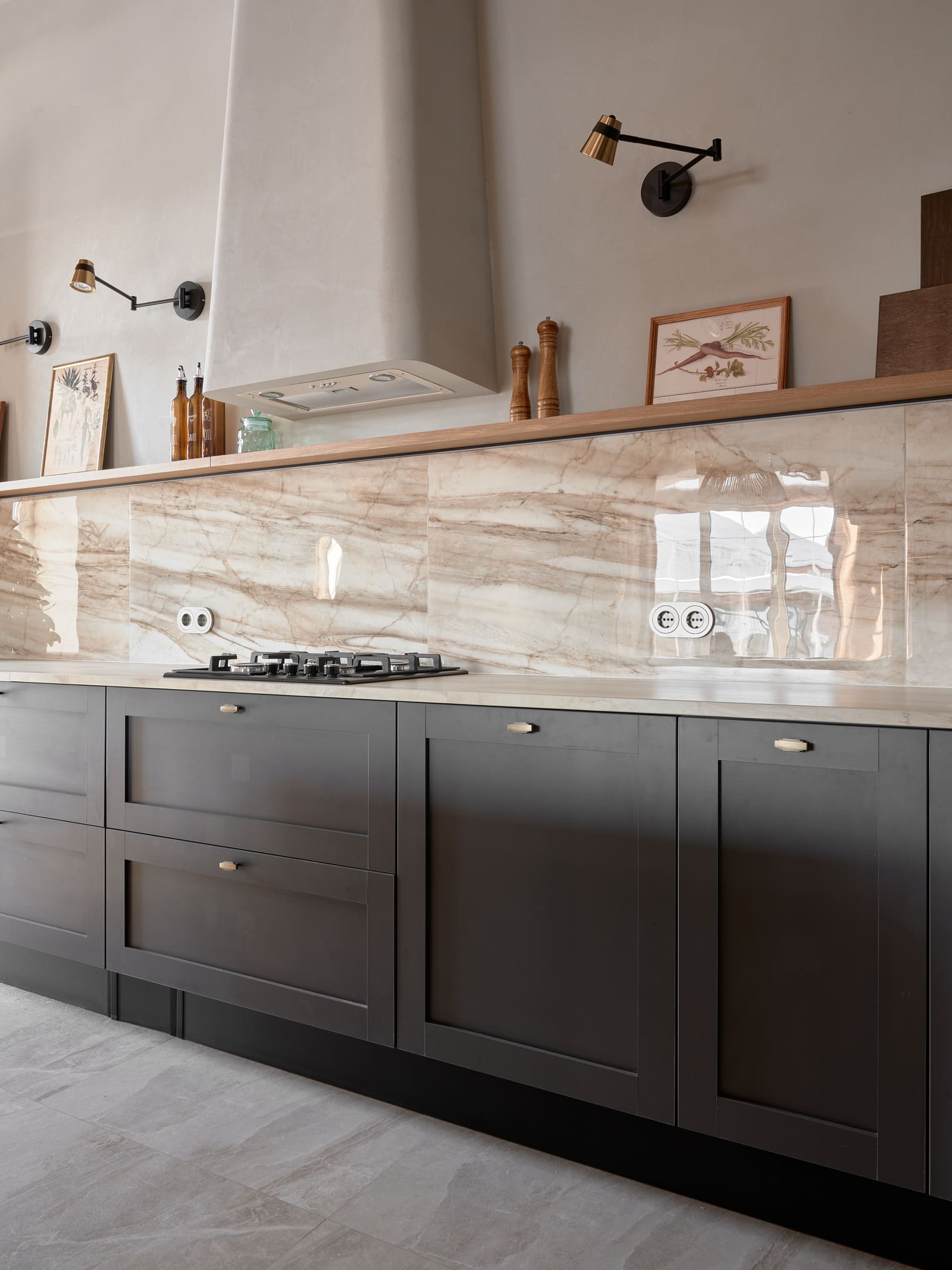
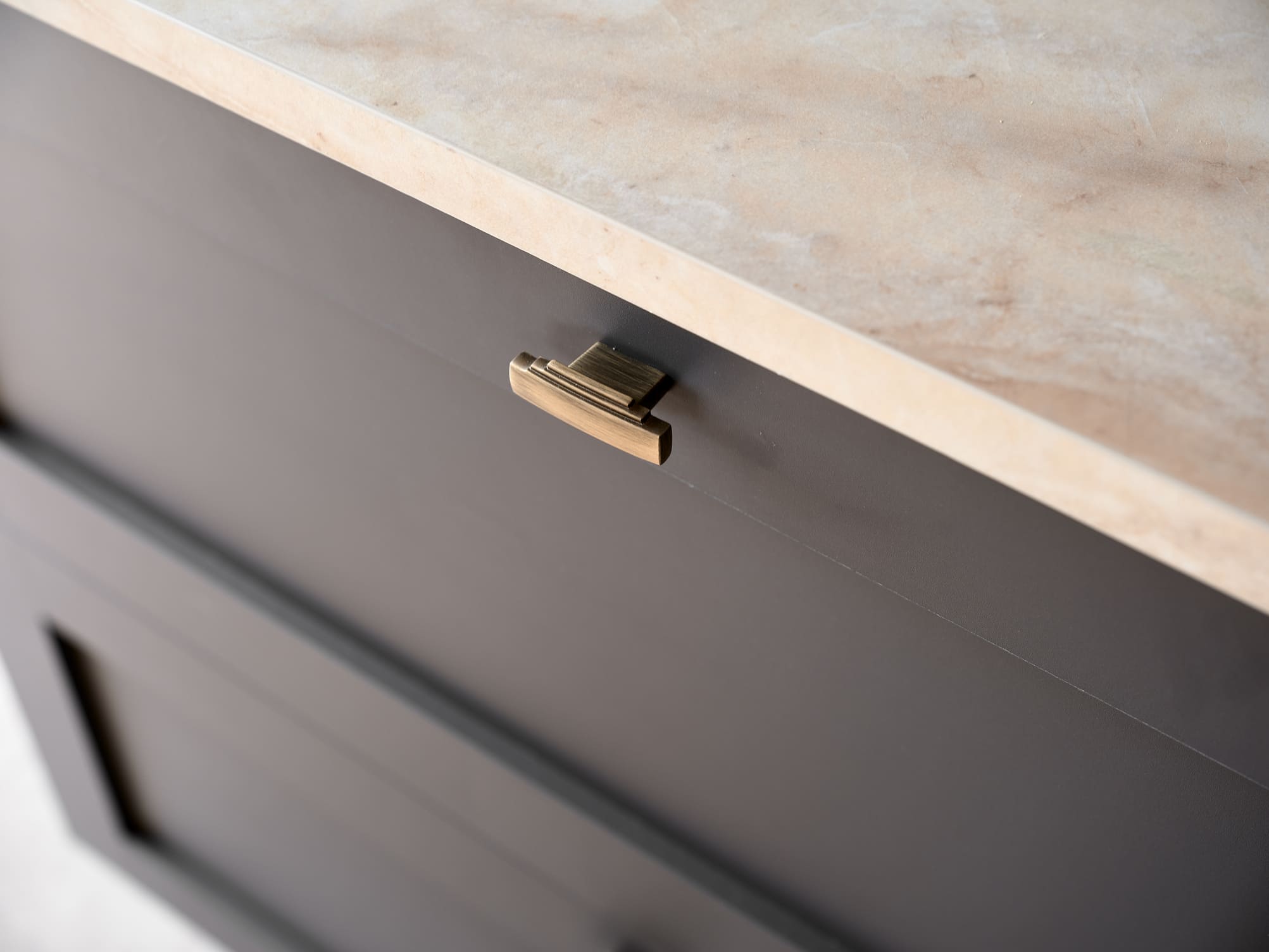
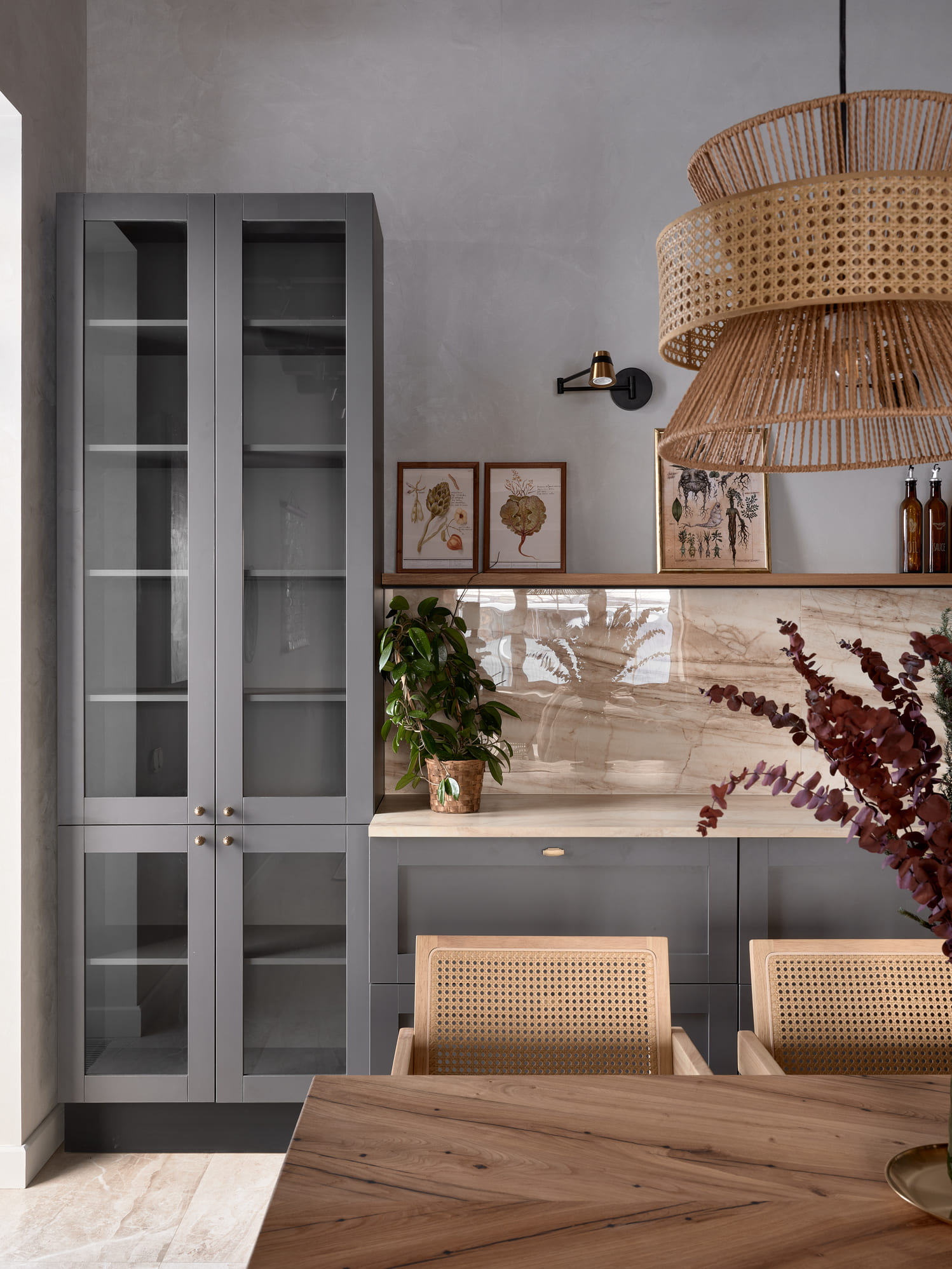
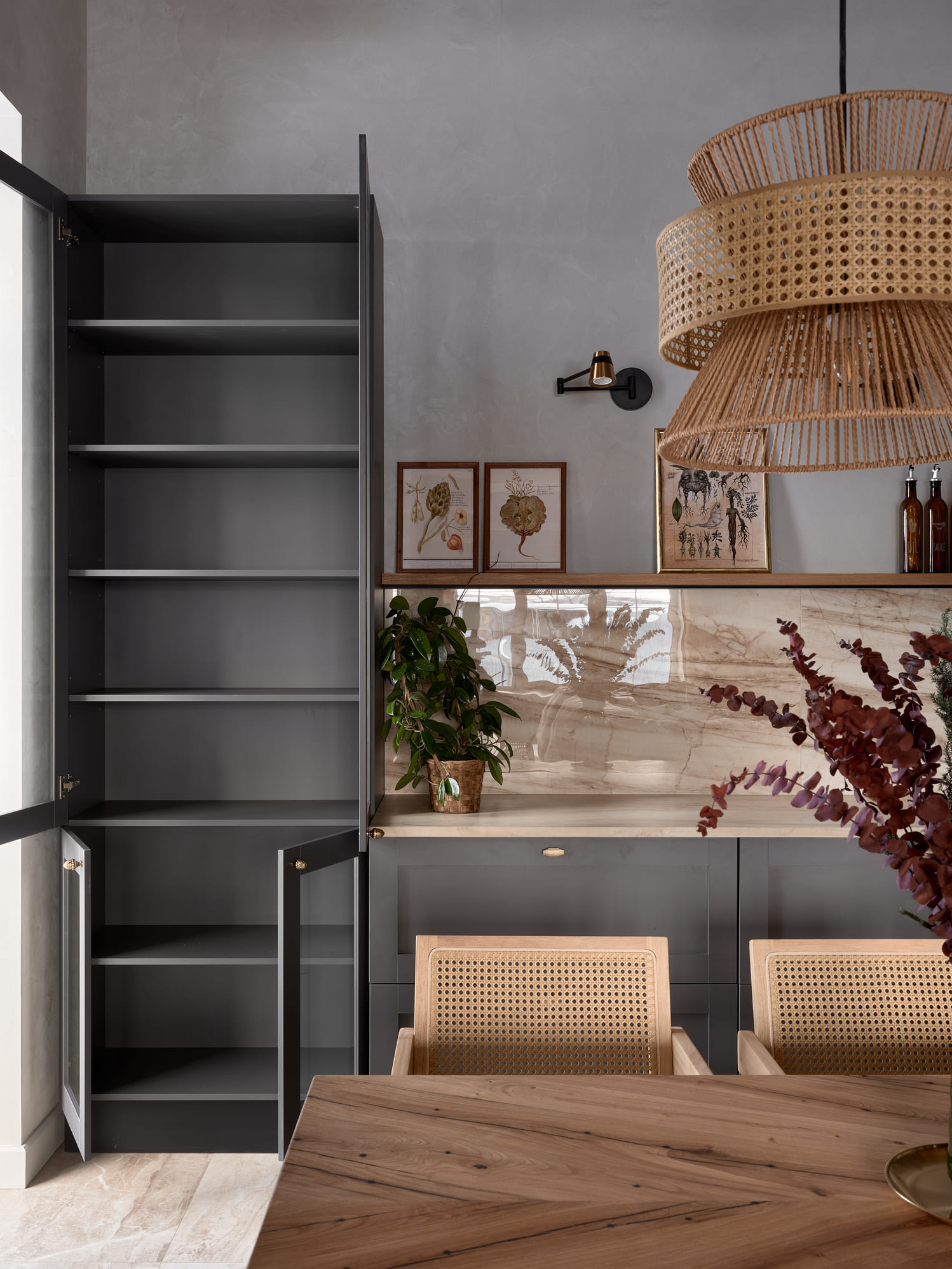
Кухню постарались максимально интегрировать в интерьер гостиной и столовой, чтобы она не выглядела отдельной утилитарной зоной. Высокие пеналы разместили в существующей нише, скрыв внутри основную технику и холодильник. От них длинной линией выстроились нижние модули. Такое решение позволило сохранить ощущение легкости и сделать акцент не на кухонной мебели, а на общей атмосфере пространства. Большое количество нижних систем хранения полностью компенсировало отсутствие верхнего яруса в основной части кухни, сохранив функциональность и визуальную чистоту интерьера. Все элементы кухни выполнены из ЛДСП Lamarty в декоре «Графит». Глубокий темный оттенок стал важной частью общей концепции — он подчеркнул архитектурность пространства, придал интерьеру выразительность. На фоне графитовых поверхностей особенно тепло раскрываются дерево, ротанг, текстиль и природные оттенки интерьера. Фасады со строгой филенкой добавили пространству классические нотки.
У двери в сад разместился высокий стеллаж в том же оттенке «Графит» из коллекции ЛДСП Lamarty со стеклянными фасадами для посуды — более декоративный и легкий элемент, который смягчил графичность кухни. Нарядные ручки на стеклянных фасадах поддержали атмосферу французского интерьера, а более лаконичная фурнитура основной мебели сохранила ощущение сдержанности и порядка.
Окна оформили легкими высокими портьерами из льна и дополнили римской шторой. Ткани смягчили геометрию пространства и подчеркнули его воздушность. Финальными штрихами стали живые растения, простые деревянные табуреты, используемые как постаменты, декоративные мешки из-под кофе, зеркала и искусство.
Подробности проекта и видео выпуска можно найти на сайте программы «Дачный ответ». Эфир от 15/02/2026
Автор проекта: Прозорова Наталия